


Main Menu
Latest Blog Entry
User login
5 tips on how to get started in S&C Coaching
 I am constantly asked on the best ways to get started in Strength & Conditioning Coaching. This post will helpfully answer most queries and help you on your way, even if there are few paid S&C jobs at the end!
Understand what it is to be a Coach first
The discipline in which you Coach is of secondary importance to your ability to Coach.
- Do you naturally share information with others?
- Do you communicate well with people outside of your own peer group?
- Do you have an innate desire to help other people fulfil their potential?
If so, then Coaching could be for you.
Learn your trade before looking for S&C jobs:
Advice from my old weightlifting coach Keith Morgan.
Earn their trust
I am often asked “what qualifications have you got that let you do your job?” It is not about the qualifications (although a sound scientific and practical knowledge base is invaluable), it is about learning and understanding the coaching process.
What works, what doesn’t; when and how to apply different aspects of training; developing your own coaching philosophy and style; learning to work in adverse conditions and environments; working with different coaches and athletes and abilities; trying out things on yourself.
Coming straight from University, it is unlikely that you will have this depth and breadth of knowledge. Similarly, reading a book, or a list of journal articles, and never having applied them, will not prepare you for coaching hairy arsed warriors on a cold Thursday night in December.
Gerald Ratner (he of the jewellers) said the same thing. He said that he draws on his experience gained on the Market Stalls when he was 15. He said that some chief executives of retail companies have never worked on the shop floor- and it shows.
Here are my 5 tips:
- Research the Coaching opportunities available to you. 90% of Coaching in the UK is part time and unpaid. 80,000 level 1 football Coaches are “qualified” every year, but there are very few people making a living from Coaching football. S&C Coaching is very much smaller than that, so have realistic expectations and paid S&C jobs rarer still.
- Start small and start local. The sooner you start the practice of Coaching the better. Self reflection, the learning from mistakes, the networking with other Coaches are all essential parts of becoming a successful Coach. Local teams, clubs and schools will trip over themselves to accept if you offer free help. 30 weeks of working on a Tuesday and Thursday night in the cold and dark will soon make you realise if you are cut out for it or not. Better to learn that way and for free sooner rather than later.
- Be careful what courses you pay for. Paying £000’s to sit in a University for 3-4 years, without any practical experience, being taught by lecturers who have very limited Coaching experience is not the way to become a good Coach. It may be part of it, but remember that Universities are businesses and they are competing for customers. Similarly, going on a 2 day kettlebell instructors training course is not much help either.
- Learn, learn, learn. Libraries and the Internet are great resources for learning. You tube is great if you aren’t sure of an exercise. You need to be reading all the time. Books are better than the internet because it takes time to acquire and direct the knowledge.The problem is filtering all that information which is why it is useful to…
- Find a mentor. Learn from someone who has been there, done that and made thousands of mistakes. I pick the brains of 3-4 people whom I trust and have helped me along the way. All are vastly more experienced than I am. They can point you in the right direction of which books and journals to read, which courses to attend and help you with problems that are bound to crop up.
Strength and conditioning at University
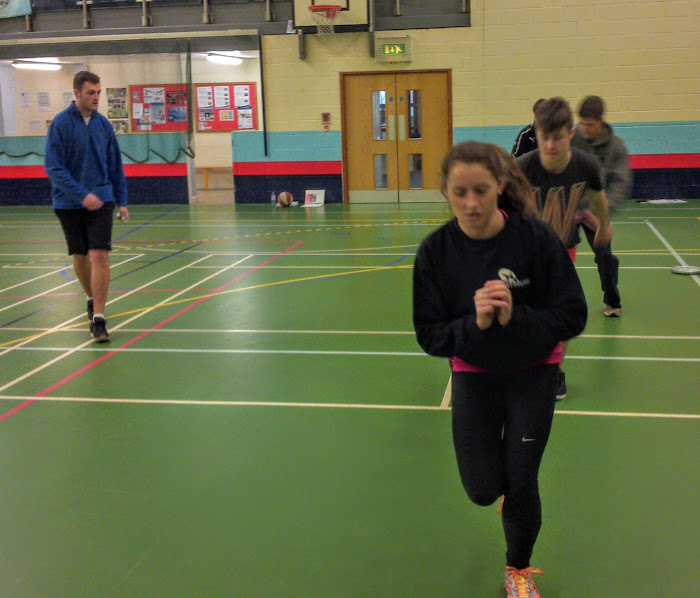
Practical work on level 1 course
I recently delivered a 30 min talk to sports science undergraduates on S&C jobs and careers. I tried to emphasise the fact that you are a coach, and therefore need to work on your coaching skills. Some of this can be done in a theoretical manner, but I honestly believe that you have to get your feet wet and start to coach. You can then reflect on your performance, adapt what you do, try again and hopefully improve.
There seemed to be a “what course can I go on to get a certificate?“mentality. Well, the course should help you understand underlying coaching principles, it should help you with the technical aspects, and it should allow you to coach and reflect and get feedback on your performance. That way you learn and develop.
There are some certifications out there that cost a lot of money, but fail to help you develop. There really are no shortcuts, best start straight away and become a better coach incrementally. There are few paying S&C jobs out there, so you had best love the coaching.
I have redesigned our S&C coaching courses to better reflect the needs of sports coaches. They wanted a 1 day course introducing Athletic Development principles, then to add modules of learning on specific topics.
They have proved very popular and I am delighted to be able to help the coaches help their teams.
Further reading:
Client Testimonials
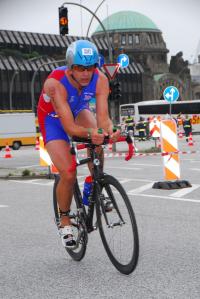 David Ardley- triathlete
I had the pleasure (I think !) of working with James for a year or so focused on getting my Triathlon times down. Its amazing what was achieved in the space of an hour before work. What stood out for me is the constant variation of exercises and his ability to set the difficulties levels just right. His sense of humour and competitive spirit always helped when my energy levels were not quite there. I can attribute his structured training to my eventual success competing in the World Triathlon championships (age group) in Hamburg.
More
Comments
I am in a paid S&C position but straight out of a sport science degree with very very little experience before hand. I’ve taught myself how to keep up with the team I’ve been working in since October, but the pressure is astronomical. I feel I cannot voice these concerns to the manager as I may lose my job for not being adequate enough, and I need the income. I’m in desperate need of someone to learn off, but I have no idea about how I can gain this. I live in Bristol and work for a professional team there. Any advice you could give me would be incredible
Thanks
Have emailed you a response. If you don’t get that, call me.
Literally getting my knickers in a twist trying to filter information about programming for clients. Where do I start…..
Thanks for comment Matt, this is a good place to start: https://excelsiorgroup.co.uk/blog/how-to-take-charge-of-your-fitness-training/